December 2024 | Contribution to the leprosy research department of Netherlands Leprosy Relief, 2024
The Turing Foundation has been co-financing projects related to the fight against leprosy with Netherlands Leprosy Relief for years.
On top of this, every year we also donate directly to Netherlands...more |
December 2023 | Contribution to the leprosy research department of Netherlands Leprosy Relief, 2023
The Turing Foundation has been co-financing projects related to the fight against leprosy with Netherlands Leprosy Relief for years.
On top of this, every year we donate 5% of the total sum of these...more |

November 2023 | Endgame strategy for leprosy in the Maldives: optimal targeting of post-exposure prophylaxis to interrupt transmission, Maldives, 2022-2023
The Maldives want to become leprosy-free in the next decade: the aim is to break transmission of the disease (zero children diagnosed with
leprosy; zero patients...more |

January 2023 | 5 year followup Maltalep/IDEAL, Bangladesh, 2023
The Maltalep trial in Bangladesh, co-funded by the Turing Foundation, evaluated the extent to which a single
preventative dose of the antibiotic rifampicine reduced cases of leprosy in the year after a BCG...more |

January 2023 | Molecular Methods in Subclinical Models of Leprosy to Test PEP, 2021-2023
Whilst multi-drug therapy has been very successful in reducing the global prevalence of leprosy, new cases still occur. This indicates that leprosy transmission is still taking place despite effective...more |
December 2022 | Contribution to the leprosy research department of Netherlands Leprosy Relief, 2022
The Turing Foundation has been co-financing projects related to the fight against leprosy with Netherlands Leprosy Relief for years.
On top of this, every year we donate 5% of the total sum of these...more |
July 2022 | Erasmus MC: Monitoring the effect of prophylactic interventions, Bangladesh, 2019-2022
This sudy by Leiden University Medical Centre and Erasmus University Rotterdam is focused on determining the long-term effect of the BCG vaccination on leprosy patients. New blood samples and new...more |
December 2021 | Contribution to the leprosy research department of Netherlands Leprosy Relief, 2021
The Turing Foundation has been co-financing projects related to the fight against leprosy with Netherlands Leprosy Relief for years.
On top of this, every year we donate 5% of the total sum of these...more |
December 2020 | Contribution to the leprosy research department of Netherlands Leprosy Relief, 2020
The Turing Foundation has been co-financing projects related to the fight against leprosy with Netherlands Leprosy Relief for years.
On top of this, every year we donate 5% of the total sum of these...more |
December 2019 | Contribution to the leprosy research department of Netherlands Leprosy Relief, 2019
The Turing Foundation has been co-financing projects related to the fight against leprosy with Netherlands Leprosy Relief for years.
On top of this, every year we donate 5% of the total sum of these...more |

April 2019 | IDRI: Integration of rapid diagnostic tests to facilitate earlier diagnosis and simplified case management of Leprosy, 2018-2019
The Infectious Disease Research Institute (IDRI) is doing research on the island of Cebu in the Philippines into the effectiveness of two new leprosy tests. The project aims...more |

January 2019 | Identification of leprosy associated immune signatures that aid as early signals for determination of type I and type II reactions in leprosy, Karigiri, India, 2016-2019
Early recognition and treatment of leprosy reactions helps prevent nerve damage and disfigurement. The Schieffelin Institute of Health (SIHR) is developing...more |
December 2018 | Contribution to the leprosy research department of Netherlands Leprosy Relief, 2018-2019
For many years the Turing Foundation has cofinanced projects to combat leprosy with the Netherlands Leprosy Relief .
In 2018 alone the Turing Foundation contributed €356.961 towards projects...more |

May 2018 | Translation of Mycobacterium Leprae molecular viability assays (MVA) to the clinical setting and application of MVA to a chemoprophylaxis-of-contacts-model, 2015-2018
The recently developed molecular viability test has proved to be able to quickly and accurately determine the viability
of the leprosy bacterium in...more |

January 2018 | INDIGO, field evaluation of novel immunodiagnostic tools for early detection of leprosy in a BCG vaccination field trial amongst contacts of leprosy patients, 2015-2018
The IDEAL consortium (Initiative for Diagnostic and Epidemiological Assays for Leprosy) is developing a new generation of tests to detect leprosy infections...more |
December 2017 | Contribution to the leprosy research department of Netherlands Leprosy Relief, 2017
For many years the Turing Foundation has cofinanced projects to combat leprosy with the Netherlands Leprosy Relief .
In 2017 alone the Turing Foundation contributed in excess of €449.404 towards...more |
January 2017 | Contribution to the leprosy research department of Netherlands Leprosy Relief, 2016
For many years the Turing Foundation has cofinanced projects to combat leprosy with the Netherlands Leprosy Relief . In 2016 alone the Turing Foundation contributed in excess of €436,989 towards...more |

January 2017 | Comparative sequencing analysis of genes associated with susceptibility to leprosy and its reactive states, 2016-2017
Developing leprosy is highly dependent on the host's genetic risk factors. Molecular studies have been conducted to determine the genetic characteristics of leprosy patients.
A...more |

January 2017 | Biomarkers for early detection of leprosy using comparative transcriptomics, 2016-2017
Leprosy is usually only diagnosed at a late stage. Diagnosis is based mainly on the presence of clinical symptoms (loss of sensation from nerve damage) and detection of the bacterium in a skin...more |

January 2017 | IDRI: Integration of rapid diagnostic tests to facilitate earlier diagnosis and simplified case management of Leprosy, 2015-2017
The Infectious Disease Research Institute (IDRI) does research into improving the early diagnosis of leprosy patients in Cebu City in the Philippines. An easily usable test was...more |

July 2016 | Research on treatment of early neuropathy in leprosy 2014-2017
The TENLEP Research Consortium (Treatment of Early Neuropathy in Leprosy) is a large international association in which 14 researchers from renowned research institutes all over the world work together,...more |

April 2016 | Research into macro- and micro-epidemiology of leprosy 2014-2016
The Leonard Wood Memorial Research Centre in Cebu, Philippines, is conducting research into the transmission patterns of leprosy. In many areas, the transfer of leprosy seems to continue despite years of...more |
January 2016 | Contribution to the leprosy research department of Netherlands Leprosy Relief, 2015
For many years the Turing Foundation has co-financed projects to combat leprosy with the Netherlands Leprosy Relief.
In 2015 alone, the Turing Foundation contributed over €463.751 to projects...more |

March 2015 | Research on immunopathology of leprosy, 2ndphase, 2011-2015
The leprosy bacterium (M.leprae) knows a high affinity for Schwann cells, which are cells that create a protective layer around peripheral nerves. A team of the Leiden University Medical Centre is...more |

January 2015 | Research into how mycobacteria lyse the phagosomal membrane 2010-2015
The Tumor Biology Department of the Netherlands Cancer Institute (NCI) conducts fundamental research into the BCG vaccine. The vaccine is used to prevent tuberculosis, but also contributes to prevention of...more |
January 2015 | Contribution to the leprosy research department of Netherlands Leprosy Relief, 2014
For many years the Turing Foundation has co-financed projects to combat leprosy with the Netherlands Leprosy Relief. In 2014 alone, the Turing Foundation contributed over €350,000 to projects...more |
January 2014 | IDEAL, early detection of leprosy: sample collection for biobanking and analysis of immune- and genetic host markers, 2014
The IDEAL Consortium (Initiative for Diagnostic and Epidemiological Assays for Leprosy) is developing a new generation of tests to diagnose leprosy in an early stage. Since 2013,...more |

October 2013 | Contribution to the leprosy research department of Netherlands Leprosy Relief, 2012-2013
The Turing Foundation has been co-funding leprosy research projects with the Netherlands Leprosy Relief
for many years. Just this year, the Turing Foundation
contributed about € 450.000...more |
March 2013 | Research into macro- and micro-epidemiology of leprosy 2010-2013
The Leonard Wood Memorial Research Centre in Cebu, Philippines, is conducting research into the transmission patterns of leprosy. In many areas, the transfer of leprosy seems to continue despite years of...more |
January 2013 | IDEAL, continuation of sample collection for biobanking and pilot testing, 2013
The IDEAL Consortium (Initiative for Diagnostics and Epidemiological Assays for Leprosy) develops immunological tests to detect leprosy infections at an early stage. In 2012, IDEAL has set up a biobank...more |

January 2013 | Research on identification of innate and adaptive immune biomarkers 2010-2013
This LUMC (Leiden University Medical Centre) research gives more insight into certain immune pathological mechanisms. These new insights will shed light on the immunopathogenesis of leprosy and the...more |
November 2012 | Contribution to the leprosy research department of Netherlands Leprosy Relief, 2012-2024
The Turing Foundation has been co-funding leprosy research projects with the Netherlands Leprosy Relief
for many years. Just this year, the Turing Foundation
contributed about € 450.000...more |
March 2012 | IDEAL sample collection for biobanking, IDEAL (Initiative for Diagnostic and Epidemiological Assays for Leprosy), 2012
The IDEAL consortium (Initiative for Diagnostic and Epidemiological Assays for Leprosy) consists of all authoritative leprosy research groups in the world and is
developing...more |
October 2010 | Main patron IDEAL consortium (Initiative for Diagnostic and Epidemiological Assays for Leprosy) 2008-2010
This consortium of thirty Leprosy research groups will develop immunological tests in the coming years...more |
July 2010 | Research on immunopathology of leprosy 2007-2011
The leprosy bacterium has a high affinity for Schwann cells - cells that form a protective layer around nerves...more |

December 2009 | Research on impact of preventive interventions on the transmission of M. Leprae, 2009-2010
The Erasmus University of Rotterdam and the KIT (Royal Tropical Institute) are together doing research into the transmission of the leprosy bacteria and the effects of prophylactic...more |
July 2009 | Field Projects Leprosy Control, Cambodia 2009
The Leprosy Foundation works together with the CIOMAL organisation on Leprosy control in Cambodia. The quality of diagnostics is a...more |

July 2009 | Field Projects Leprosy Control, Laos 2009
In Laos leprosy occurs mostly among minorities that are hard to reach. Mutilations are often severe and irreparable if the...more |

May 2008 | Field Projects Leprosy Control, Cambodia 2008
The Leprosy Foundation works together with the CIOMAL organisation on Leprosy control in Cambodia. The quality of diagnostics is a...more |

May 2008 | Field Projects Leprosy Control, Laos 2008
In Laos leprosy occurs mostly among minorities that are hard to reach. Mutilations are often severe and irreparable if the...more |

March 2007 | Projects to cure leprosy 2007
The Dutch Leprosy Foundation invests all over the world in projects that help diagnose and cure people who suffer from leprosy...more |

2006 | €1.000.000 for the Dutch Leprosy Foundation, 2006-2007
The Dutch Leprosy Foundation has devoted itself for forty years to creating a world in which the permanent suffering, caused by leprosy, is no longer existent...more |

Scientific Research
The Turing Foundation aims at the elimination of leprosy as a disfiguring disease and supports scientific research
into diagnosing and curing the desease, and preventing its spread.
Recent projects
|
 |
Contribution to the leprosy research department of Netherlands Leprosy Relief, 2024
The Turing Foundation has been co-financing projects related to the fight against leprosy with Netherlands Leprosy Relief for years.
On top of this, every year we also donate directly to Netherlands Leprosy Relief
as a contribution towards the overhead costs it incurs as a member of the Leprosy Research Initiative:
the international partnership for financing leprosy research.
Our 2024 contribution towards Netherlands Leprosy Relief's overhead costs has been set at € 10.000.
See also:
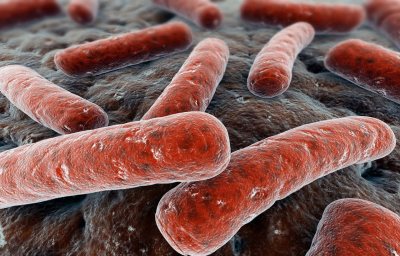
M. Leprae bacteria
|
|
Contribution to the leprosy research department of Netherlands Leprosy Relief, 2023
The Turing Foundation has been co-financing projects related to the fight against leprosy with Netherlands Leprosy Relief for years.
On top of this, every year we donate 5% of the total sum of these donations directly to Netherlands Leprosy Relief
as a contribution towards the overhead costs it incurs as a member of the Leprosy Research Initiative:
the international partnership for financing leprosy research.
In 2023 the Turing Foundation contributed a total of € 235,555 towards various studies.
This means that our contribution towards Netherlands Leprosy Relief's overhead costs in 2023 has been set at € 11.778.
See also:
M. Leprae bacteria
|
  |
5 year followup Maltalep/IDEAL, Bangladesh, 2023
The Maltalep trial in Bangladesh, co-funded by the Turing Foundation, evaluated the extent to which a single
preventative dose of the antibiotic rifampicine reduced cases of leprosy in the year after a BCG vaccination
(this vaccination is usually given to prevent tuberculosis, which is caused by a bacterium closely related to
the leprosy bacterium). Two years after the dose of rifampicine, there was (as yet) no convincing proof of any effect.
This study examined the results of the five-year trial after administration of the rifampicine. This focused on
comparing new cases of leprosy in the two intervention groups (people who received a BCG vaccination with or without
a dose of rifampicine). In addition, a comparison is being made with a non-intervention cohort, without vaccination,
which has been followed in the same period (the IDEAL study, which was also co-financed by the Turing Foundation).
The results of this research will contribute towards knowledge of the effects of a single preventative dose of
rifampicine and lead to recommendations for the use of this antibiotic to prevent leprosy.
The Turing Foundation is contributing € 23,840 towards this research.
See also:

Monitoring the effect of prophylactic interventions in contacts of leprosy patients including field-application of a novel immunodiagnostic test, Bangladesh
|
|
Contribution to the leprosy research department of Netherlands Leprosy Relief, 2022
The Turing Foundation has been co-financing projects related to the fight against leprosy with Netherlands Leprosy Relief for years.
On top of this, every year we donate 5% of the total sum of these donations directly to Netherlands Leprosy Relief
as a contribution towards the overhead costs it incurs as a member of the Leprosy Research Initiative:
the international partnership for financing leprosy research.
In 2022 the Turing Foundation contributed a total of € 178,320 towards various studies.
This means that our contribution towards Netherlands Leprosy Relief's overhead costs in 2022 has been set at € 8,916.
See also:
M. Leprae bacteria
|
 |
Molecular Methods in Subclinical Models of Leprosy to Test PEP, 2021-2023
Whilst multi-drug therapy has been very successful in reducing the global prevalence of leprosy, new cases still occur. This indicates that leprosy transmission is still taking place despite effective treatment. Treating individuals known to have been exposed to leprosy, also known as post exposure prophylaxis (PEP), can reduce the number of subclinical infections and transmission of the disease. This study will evaluate different PEP treatments and provide experimental evidence on the level of effectiveness. The goal is to determine the most effective PEP treatment regardless of the host's level of immune functionality.
This study by National Hansen's Disease Programs builds on a previous study by the same group, which also received funding from the Turing Foundation.
The Turing Foundation is contributing €24,384 towards this NHDP project (of which, €11,500 in 2022). The Leprosy Research Initiative is matching this contribution.
See also:

Molecular Methods in Subclinical Models of Leprosy to Test PEP
|
|
Contribution to the leprosy research department of Netherlands Leprosy Relief, 2021
The Turing Foundation has been co-financing projects related to the fight against leprosy with Netherlands Leprosy Relief for years.
On top of this, every year we donate 5% of the total sum of these donations directly to Netherlands Leprosy Relief
as a contribution towards the overhead costs it incurs as a member of the Leprosy Research Initiative:
the international partnership for financing leprosy research.
In 2021 the Turing Foundation contributed a total of € 227,347 towards six studies into early diagnosis of leprosy.
This means that our contribution towards Netherlands Leprosy Relief's overhead costs in 2021 has been set at € 11,367.
See also:
M. Leprae bacteria
|
|
Contribution to the leprosy research department of Netherlands Leprosy Relief, 2020
The Turing Foundation has been co-financing projects related to the fight against leprosy with Netherlands Leprosy Relief for years.
On top of this, every year we donate 5% of the total sum of these donations directly to Netherlands Leprosy Relief
as a contribution towards the overhead costs it incurs as a member of the Leprosy Research Initiative:
the international partnership for financing leprosy research.
In 2020 the Turing Foundation contributed a total of € 209,472 towards six studies into early diagnosis of leprosy.
This means that our contribution towards Netherlands Leprosy Relief's overhead costs in 2020 has been set at € 10,474.
See also:
M. Leprae bacteria
|
|
Contribution to the leprosy research department of Netherlands Leprosy Relief, 2019
The Turing Foundation has been co-financing projects related to the fight against leprosy with Netherlands Leprosy Relief for years.
On top of this, every year we donate 5% of the total sum of these donations directly to Netherlands Leprosy Relief
as a contribution towards the overhead costs it incurs as a member of the Leprosy Research Initiative:
the international partnership for financing leprosy research.
In 2019 the Turing Foundation contributed a total of € 215,235 towards six studies into early diagnosis of leprosy.
This means that our contribution towards Netherlands Leprosy Relief's overhead costs in 2019 has been set at € 10,762.
See also:
M. Leprae bacteria
|
 |
IDRI: Integration of rapid diagnostic tests to facilitate earlier diagnosis and simplified case management of Leprosy, 2018-2019
The Infectious Disease Research Institute (IDRI) is doing research on the island of Cebu in the Philippines into the effectiveness of two new leprosy tests. The project aims to detect leprosy at an early stage in leprosy patients' contacts and to better monitor the progression of the disease in leprosy patients being treated. In the earlier phase of the study, blood was collected from leprosy patients and their contacts using a finger prick. This group is being followed and screened for a period of 4 years.
The Turing Foundation already contributed €140,000 towards the earlier phase of this research and is contributing €55,988 towards the final phase (2018-2019).
See also:

IDRI: Integration of rapid diagnostic tests to facilitate earlier diagnosis and simplified case management of Leprosy
|
|
Contribution to the leprosy research department of Netherlands Leprosy Relief, 2018-2019
For many years the Turing Foundation has cofinanced projects to combat leprosy with the Netherlands Leprosy Relief .
In 2018 alone the Turing Foundation contributed €356.961 towards projects like
IDRI (Integration of rapid diagnostic tests to facilitate earlier diagnosis and simplified case management of Leprosy),
Erasmus/LUMC (INDIGO field evaluation of novel immunodiagnostic tools for early detection of leprosy),
NHDP (Translation of M Leprae molecular viability assays to the clinical setting, and application to a chemoprophylaxis-of-contacts-model),
LSHTM (Randomised controlled trials of methotrexate in Erythema Nodosum Leprosum),
and
SIHR (Identification of leprosy associated immune signatures as early signals for leprosy reactions),
For this reason, the Turing Foundation donates €17.848 in 2018 directly to Netherlands Leprosy Relief to cover its scientific research overheads.
See also:
M. Leprae bacteria
|
 |
Identification of leprosy associated immune signatures that aid as early signals for determination of type I and type II reactions in leprosy, Karigiri, India, 2016-2019
Early recognition and treatment of leprosy reactions helps prevent nerve damage and disfigurement. The Schieffelin Institute of Health (SIHR) is developing a laboratory test for early diagnosis of type I and type II leprosy reactions. Genetic material from blood and skin biopsies from leprosy patients are used to determine which genes differ in function between patients with and without leprosy reactions, and also which gene expression patterns possibly play a role in eliciting leprosy reactions in the skin, and the nervous system. These genes and associated proteins they encode are being used to develop the laboratory test. In addition, the level of cytokines, chemokines, growth factors and antimicrobial peptides in the blood are estimated, and research is being conducted in order to see whether diagnostic conclusions can be drawn.
The Turing Foundation is contributing €73,838 towards this research.
See also:

Identification of leprosy associated immune signatures that aid as early signals for determination of type I and type II reactions in leprosy, Karigiri, India, 2016-2019
|
|
Contribution to the leprosy research department of Netherlands Leprosy Relief, 2017
For many years the Turing Foundation has cofinanced projects to combat leprosy with the Netherlands Leprosy Relief .
In 2017 alone the Turing Foundation contributed in excess of €449.404 towards projects like TENLEP (Research on treatment of early neuropathy in leprosy),
Erasmus/LUMC (INDIGO field evaluation of novel immunodiagnostic tools for early detection of leprosy), NHDP (Translation of M. Leprae molecular viability
assays to the clinical setting, and application to a chemoprophylaxis-of-contacts-model), LSHTM (Randomised controlled trials of methotrexate in Erythema Nodosum Leprosum),
SIHR (Identification of leprosy associated immune signatures as early signals for leprosy reactions), PUCPR (Comparative sequencing analysis of genes
associated with susceptibility to leprosy and its reactive states), NHDP (Biomarkers for early detection of leprosy using comparative transcriptomics),
IDRI (Integration of rapid diagnostic tests to facilitate earlier diagnosis and simplified case management of Leprosy), and the Leonard Wood Memorial
Research Center (Research into macro- and micro-epidemiology of leprosy).
For this reason, the Turing Foundation donated €22,470 in 2017 directly to Netherlands Leprosy Relief to cover its scientific research overheads.
See also:
M. Leprae bacteria
|
|
Contribution to the leprosy research department of Netherlands Leprosy Relief, 2016
For many years the Turing Foundation has cofinanced projects to combat leprosy with the Netherlands Leprosy Relief . In 2016 alone the Turing Foundation contributed in excess of €436,989 towards projects like TENLEP (Research on treatment of early neuropathy in leprosy), Erasmus/LUMC (INDIGO field evaluation of novel immunodiagnostic tools for early detection of leprosy), NHDP (Translation of M. Leprae molecular viability assays to the clinical setting, and application to a chemoprophylaxis-of-contacts-model), LSHTM (Randomised controlled trials of methotrexate in Erythema Nodosum Leprosum), SIHR (Identification of leprosy associated immune signatures as early signals for leprosy reactions), PUCPR (Comparative sequencing analysis of genes associated with susceptibility to leprosy and its reactive states), NHDP (Biomarkers for early detection of leprosy using comparative transcriptomics), IDRI (Integration of rapid diagnostic tests to facilitate earlier diagnosis and simplified case management of Leprosy), and the Leonard Wood Memorial Research Center (Research into macro- and micro-epidemiology of leprosy).
For this reason, the Turing Foundation donated €21,849 in 2016 directly to Netherlands Leprosy Relief to cover its scientific research overheads.
See also:
Leprosy in the spleen
|
|
Biomarkers for early detection of leprosy using comparative transcriptomics, 2016-2017
Leprosy is usually only diagnosed at a late stage. Diagnosis is based mainly on the presence of clinical symptoms (loss of sensation from nerve damage) and detection of the bacterium in a skin scrape or skin biopsy.
Leprosy has virulence factors which - in combination with other molecules (called Pathogen Associated Molecular Patterns or PAMPs) - elicit a characteristic gene expression pattern - known as a transcriptional profile. This profile determines the outcome of the infection in different hosts: sickness or removal of the bacteria.
To find out why some people are resistant to M. leprae whilst others develop the disease, the NHDP (National Hansen's Disease Programs) is conducting research on armadillos, which react similarly to M. leprae as humans. Transcriptional profiles are compared at various times after infection to identify genes differing between resistant and susceptible hosts. In this way identification of characteristic genetic signatures will probably be able to predict these animals' reaction to the M. leprae. This offers great potential for early leprosy diagnosis in humans.
The Turing Foundation is contributing €55,000 to this project (of which, €30,000 in 2017).
See also:
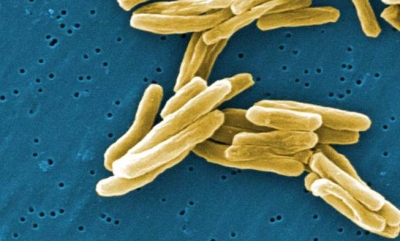
Biomarkers for early detection of leprosy using comparative transcriptomics
|
 |
Research on treatment of early neuropathy in leprosy 2014-2017
The TENLEP Research Consortium (Treatment of Early Neuropathy in Leprosy) is a large international association in which 14 researchers from renowned research institutes all over the world work together, combining their expertise in the field of leprosy-related inflammation of the nerves.
TENLEP Trial is a large-scale research project focussing on nerve damage caused by leprosy. Its central research questions are:
1. To what extent can treatment of sub-clinical nerve damage reduce the number of patients with permanent nerve function impairments?
2. What is the most effective treatment for patients who have a clinical nerve function impairments?
A random double blind research method was designed to find the answers to these questions, including two integrated trials. In these trials, a corticosteroid treatment of sub-clinical nerve damage will be tested (during sixteen weeks and six months). Dependent on the type of nerve damage, patients will participate in one of the two trials. Subsequently, all patients will be categorized randomly into a group getting treatment and a group receiving a placebo. The effect of the leprosy treatment will be measured within 6, 12, and 18 months after it has started. Various advanced electronic devices, measuring factors such as nerve conductivity and sense of temperature, will be used to monitor the effect of treatment as meticulously as possible. Apart from that, the measuring will be done by means of an activity scale. A comparison between the results of the groups getting either treatment or a placebo must make clear which type of treatment reduces the risk of permanent nerve damage as much as possible. The research will be conducted in the Netherlands, England and the largest leprosy endemic countries (Indonesia, India, the Philippines, Bangladesh, Brasil and Ethiopia).
The Turing Foundation contributes € 742,847 to this research project (approx. 50% of the total research budget).
See also:

Scanning Electron Microscopy of M. leprae
|
 |
Research into macro- and micro-epidemiology of leprosy 2014-2016
The Leonard Wood Memorial Research Centre in Cebu, Philippines, is conducting research into the transmission patterns of leprosy. In many areas, the transfer of leprosy seems to continue despite years of successful MDT (Multi-Drug Treatment) for lepers. The study's hypothesis is that effective leprosy control can be developed only with a better understanding of the transmission patterns within communities, and the identification of people with an increased risk of developing leprosy. Only then, interventions like chemoprofylaxe and/or immunoprofylaxe can be distributed properly and be cost-effective.
Main goal of the research is to map all known cases of leprosy in Cebu in both space and time, and add all new cases of leprosy to the database (macro-epidemiology). Then, the database should be expanded with the M.leprae strain typing within the clusters of the new cases (micro-epidemiology) to reach a better understanding of the disease's transmission patterns, its risk factors and the virulence patterns of the M.leprae strains. The detailed mapping of cases of leprosy combined with the strain typing that should enable the identification of transmission patterns within a properly demarcated area has never before been attempted.
De Turing Foundation contributed € 118.500 to the previous phase of this long-range study
and will contribute another € 132,000 in the coming years (€ 45,000 of which will be donated in 2016).
See also:
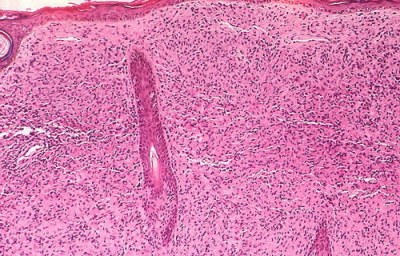
Skin infected with leprosy
|
|
Contribution to the leprosy research department of Netherlands Leprosy Relief, 2015
For many years the Turing Foundation has co-financed projects to combat leprosy with the Netherlands Leprosy Relief.
In 2015 alone, the Turing Foundation contributed over €463.751 to projects like TENLEP, LUMC immunopathology, the Dutch Cancer Institute, and the Leonard Wood Memorial Research Center.
For this reason the Turing Foundation donated €23.118 directly to the Netherlands Leprosy Relief to cover its scientific research overheads over the past year.
See also:
Leprosy in the spleen
|
 |
Research on immunopathology of leprosy, 2ndphase, 2011-2015
The leprosy bacterium (M.leprae) knows a high affinity for Schwann cells, which are cells that create a protective layer around peripheral nerves. A team of the Leiden University Medical Centre is researching the processes that may lead to the damaging of Schwann cells and nerves, and the lifelong handicaps that result from that damage.
For some time now, an effective treatment of the leprosy bacterium has been available, consisting of an antibiotics cocktail. Unfortunately, for some people the treatment is accompanied with severe immune responses that cause irreparable nerve damage anyway. It is thought that sometimes, a leprosy bacterium in a Schwann cell is destroyed, after which the Schwann cell could be damaged or even killed by immune cells (T cells) because they respond to the leprosy bacterium's tiny residue (peptides). It could be one of the mechanisms that are involved in causing of nerve damage due to leprosy. Based on models from previous research involving mice, LUMC researchers think that certain T-cell types are an important link in the process, yet are uncertain about its exact nature and functioning.
Now, new research will be conducted to determine which immune cells (and which products they produce, such as signal molecules and cytokines) play a part in the damaging of Schwann cells and nerves with lepers. Researchers think a dysregulation of immune responses to the M.leprae bacterium is responsible for the uncontrolled inflammatory and defensive responses that are characteristic for leprosy. They also predict the unravelling of the mechanisms involved will lead to the identification and development of new methods to treat or even prevent responses in leprosy. Another thing that is very important for the identification of biomarkers for an early diagnosis or prediction of responses in leprosy, as well as for the development of new treatments and improvement of the prevention of responses in leprosy, is a better understanding of the mechanisms of the nerve damage that is so common with responses in leprosy, and the immune cells and substances responsible for it.
The study is aimed at understanding these immunopathological mechanisms, in the hope its results can be used in the development of new strategies for the prediction, detection, and prevention of nerve damage in leprosy.
Until 2015, the Turing Foundation will contribute € 150,000 to
this study; € 37,500 is donated in 2015. Previously, the Turing
Foundation contributed € 337,500 to phase I of this research.
See also:

Researching the immunopathology of leprosy
|
 |
Research into how mycobacteria lyse the phagosomal membrane 2010-2015
The Tumor Biology Department of the Netherlands Cancer Institute (NCI) conducts fundamental research into the BCG vaccine. The vaccine is used to prevent tuberculosis, but also contributes to prevention of leprosy.
Previous research of NCI showed an important difference between pathogenic and non-pathogenic bacteria. The difference lies in their location within the host cell. Pathogenic strains such as M.leprae, as well as other mycobacteria, live freely within the cell and can meet proteins that are able to hold antigens (small parts of the bacterium) and present these to the immune system. The strain currently used to prevent mycobacterial infections (vaccine strain BCG) is non-pathogenic. This strain resides in a compartment of the cell that wraps the bacterium in a film (membrane). Researchers want to improve the vaccine by using these characteristics, but to do this it is vital to understand what factors of both the bacterium and the host are involved in the process.
The Turing Foundation contributes € 260,000 to this long-range study (€ 56,000 of which in 2015).
See also:

Mycobacterium Tuberculosis
|
|
Contribution to the leprosy research department of Netherlands Leprosy Relief, 2014
For many years the Turing Foundation has co-financed projects to combat leprosy with the Netherlands Leprosy Relief. In 2014 alone, the Turing Foundation contributed over €350,000 to projects like TENLEP, LUMC immunopathology, the Dutch Cancer Institute, and the Leonard Wood Memorial Research Center.
For this reason the Turing Foundation donated €17,614 directly to the Netherlands Leprosy Relief to cover its scientific research overheads over the past year.
See also:
Leprosy in the spleen
|
  |
IDEAL, early detection of leprosy: sample collection for biobanking and analysis of immune- and genetic host markers, 2014
The IDEAL Consortium (Initiative for Diagnostic and Epidemiological Assays for Leprosy) is developing a new generation of tests to diagnose leprosy in an early stage. Since 2013, IDEAL has been collecting blood samples of leprosy patients and their household contacts in a biobank meant for future analysis of contamination, and transmission of the leprosy bacterium. In 2013, immunodiagnostics that were developed in an earlier phase of the IDEAL study have been developed further in the field. In 2014, apart from expanding the biobank, they will start on the analysis of the blood samples.
Over the past years, the Turing Foundation has already donated € 800,000 to the IDEAL study.
In 2014, the foundation will contribute another € 155,000.
See also:

Taking bloodsamples for the IDEAL biobank
|
|
Contribution to the leprosy research department of Netherlands Leprosy Relief, 2012-2013
The Turing Foundation has been co-funding leprosy research projects with the Netherlands Leprosy Relief
for many years. Just this year, the Turing Foundation
contributed about € 450.000 to such projects,
matched euro-for-euro by the NLR.
To judge the applications, we gratefully use the expertise of the
CWO
(the scientific advisory committee of the Netherlands Leprosy Relief).
The Turing Foundation has decided to donate € 40.000 to
Netherlands Leprosy Relief itself, to help fund their overhead
related to scientific research.
Furthermore, the Turing will mark-up any future research projects
shared with Netherlands Leprosy Relief by 5%.
See also:

Workers in Cambodia are being trained in recognizing and preventing leprosy (Turing Foundation en Leprastichting, 2009)
|
|
Research into macro- and micro-epidemiology of leprosy 2010-2013
The Leonard Wood Memorial Research Centre in Cebu, Philippines, is conducting research into the transmission patterns of leprosy. In many areas, the transfer of leprosy seems to continue despite years of successful MDT (Multi-Drug Treatment) for lepers. The study's hypothesis is that effective leprosy control can be developed only with a better understanding of the transmission patterns within communities, and the identification of people with an increased risk of developing leprosy. Only then, interventions like chemoprofylaxe and/or immunoprofylaxe can be distributed properly and be cost-effective.
Main goal of the research is to map all known cases of leprosy in Cebu in both space and time, and add all new cases of leprosy to the database (macro-epidemiology). Then, the database should be expanded with the M.leprae strain typing within the clusters of the new cases (micro-epidemiology) to reach a better understanding of the disease's transmission patterns, its risk factors and the virulence patterns of the M.leprae strains. The detailed mapping of cases of leprosy combined with the strain typing that should enable the identification of transmission patterns within a properly demarcated area has never before been attempted.
The Turing Foundation will contribute € 118,500 to this long-range study (€ 43,000 of which will be donated in 2012).
See also:
Skin infected with leprosy
|
|
IDEAL, continuation of sample collection for biobanking and pilot testing, 2013
The IDEAL Consortium (Initiative for Diagnostics and Epidemiological Assays for Leprosy) develops immunological tests to detect leprosy infections at an early stage. In 2012, IDEAL has set up a biobank by collecting and storing samples, meant for future analysis of infection and transmission of the leprosy bacterium, and it has developed Diagnostic tests as well as tests for molecular epidemiology. In 2013, these tests will be developed further in the field, paving the way for an important next step in the research program that should lead to an effective preventive treatment of leprosy patients.
In 2012, the Turing Foundation will be contributing € 69,128 to the project. In the past, the Turing Foundation already contributed € 644,000 + € 90,000 to the IDEAL research project.
See also:
Taking bloodsamples for the IDEAL biobank
|
|
Research on identification of innate and adaptive immune biomarkers 2010-2013
This LUMC (Leiden University Medical Centre) research gives more insight into certain immune pathological mechanisms. These new insights will shed light on the immunopathogenesis of leprosy and the leprosy reactions that lead to nerve damage. In such way strategies can be developed for the prevention and detection of nerve damage caused by leprosy.
Techniques for detecting and diagnosing leprosy in an early stage are of great importance for the prevention of nerve damage. To enable the early diagnoses and prediction of certain reactions, the LUMC research aims to gain more insight into the role different cell types - such as macrophages and T-cells (which have many different sub sets) and the signal substance they produce (such as cytokines)- play in the development of nerve damage in case of leprosy and leprosy reactions.
The LUMC research team is able to isolate and generate various types of these (new) human cellular sub sets, making it possible to study the processes that can lead to nerve damage elaborately. LUMC's theory is that the activation of certain cell types, such as the T-cells that play a role in inflammation diseases (so-called th17 cells) is a main element in this process. Too little is now known about the exact nature and working of these mechanisms, cell types and factors in the human body.
The Turing Foundation contributes a sum of € 260,000, which covers 50% of the research costs.
The project runs until 2013. In 2013, the contribution is € 66.545;
See also:

immune biomarkers
|
|
Contribution to the leprosy research department of Netherlands Leprosy Relief, 2012-2024
The Turing Foundation has been co-funding leprosy research projects with the Netherlands Leprosy Relief
for many years. Just this year, the Turing Foundation
contributed about € 450.000 to such projects,
matched euro-for-euro by the NLR.
To judge the applications, we gratefully use the expertise of the
CWO
(the scientific advisory committee of the Netherlands Leprosy Relief).
The Turing Foundation has decided to donate € 40.000 to
Netherlands Leprosy Relief itself, to help fund their overhead
related to scientific research.
Furthermore, the Turing will mark-up any future research projects
shared with Netherlands Leprosy Relief by 5%.
See also:
Workers in Cambodia are being trained in recognizing and preventing leprosy (Turing Foundation en Leprastichting, 2009)
|
|
IDEAL sample collection for biobanking, IDEAL (Initiative for Diagnostic and Epidemiological Assays for Leprosy), 2012
The IDEAL consortium (Initiative for Diagnostic and Epidemiological Assays for Leprosy) consists of all authoritative leprosy research groups in the world and is
developing immunological tests in order to be able to diagnose leprosy infections at an early stage. The consortium is also working on molecular tests to gain a better
insight into the transmission of leprosy bacteria. Eventually, the initiative wants to create tests that enable the detection and treatment of leprosy even before it
has manifested itself. In 2012, IDEAL wants to collect and store samples to set up a biobank for the future analysis of biomarker profiles for the pathogen and
protective immune response on M. leprae.
In 2012, the Turing Foundation will contribute € 90,000 to
the project. Previously, the Turing Foundation already donated € 644,000 to IDEAL's research.
See also:
IDEAL - Initiative for Diagnostic and Epidemiological Assays for Leprosy
|
 |
Main patron IDEAL consortium (Initiative for Diagnostic and Epidemiological Assays for Leprosy) 2008-2010
The IDEAL consortium (Initiative for Diagnostic and Epidemiological Assays for Leprosy) consists of thirty Leprosy research groups, half of which is established in countries where leprosy still occurs. All research groups have a background in laboratory research and/or research involving patients in the field. All major research groups in the world engaged in this branch of leprosy research are members of IDEAL.
The IDEAL consortium is oriented towards the development of immunological tests that can detect leprosy infections in an early stage. Apart from that, molecular tests are developed for gaining a better insight into the transmission of the leprosy bacterium. The ultimate goal is to find tests that can help prevent leprosy infections by the very early (before the illness has even manifested itself) diagnosis and treatment of leprosy.
The partners discuss the results of experiments, exchange experiences and information, provide materials and protocols from individual research projects and perform experiments after mutual consultation and in accordance with a testing format agreed upon. This streamlines and accelerates the research process, and yields quicker results for leprosy elimination.
Since the end of 2005, IDEAL has selected several candidates for both early diagnostics and transmission studies. A test will be developed between 2008 and 2010 that can critically identify leprosy infections in blood, and efforts will be made to enable the further identification of genetic markers on the leprosy bacterium. The markers can be used in transmission studies.
After 2010, IDEAL aims to start a large-scale research project on leprosy prevention through (tailor-made) prophylactic treatment of leper contacts.
The Turing Foundation contributes € 131,000 to this project in 2010.
In total, the Turing Foundation contributes
€ 644,000 in the coming years
(approx. 60% of the total project cost)
towards the development of the above-mentioned tests.
See also:
IDEAL - Initiative for Diagnostic and Epidemiological Assays for Leprosy
|
|
Research on immunopathology of leprosy 2007-2011
Leprosy is a contagious disease, caused by infection with a bacterium. This bacterium has a great affinity for,
amongst others, Schwann cells - cells that form a protective layer around peripheral nerves. A team of the
Leiden University Medical Centre
conducts scientific research in order to gain a deeper insight into the processes that can lead to damages to Schwann cells and nerves - and to the related lifetime handicaps.
For some time now, an effective antibiotics cocktail treatment of the infection is possible. Some patients however show strong immune reactions to this treatment, which then still lead to irreparable nerve damages.
It is assumed that a leprosy bacterium within a Schwann cell is sometimes destroyed, and that small fragments (peptides) of this bacterium are presented by the Schwann cell to T-cells (defence cells). In certain circumstances, these T-lymphocytes can damage or even kill the Schwann cell. It is possible that this is one of the mechanisms involved in causing nerve damages as a result of leprosy. The LUMC-researchers think - on the basis of models originating from research on mice - that certain types of T-cells are important links in the process, but their exact nature and operations are as yet insufficiently known. The research focuses on thrashing out these immuno-pathological mechanisms, in hopes that the results can be used to develop new strategies for forecasting, tracing and preventing nerve damages as a result of leprosy.
The Turing Foundation contributes € 337,500 to this research, of which 75.000 in 2010.
See also:
Leprosy in the spleen
|
|
Research on impact of preventive interventions on the transmission of M. Leprae, 2009-2010
The Erasmus University of Rotterdam and the KIT (Royal Tropical Institute) are together doing research into the transmission of the leprosy bacteria and the effects of prophylactic treatments.
Prophylactic treatment means that antibiotics are administered to people who do not (yet) suffer from leprosy. This can be compared to the prevention of malaria in travellers by prescribing medicine. In 2001, a research project started into the effects of prophylactic treatment of leprosy contacts on leprosy prevention. It is conducted in North Western Bangladesh. In the past six years all new leprosy cases, whether in- our outside the patient contact group, have been traced. It has been examined whether rifampicin leprosy occurred among the contact group. This appeared to be the case and even more so if the prophylactic treatment was combined with a BCG vaccine - which is today a standard vaccination for most children in the first year of their lives. During the current one year project, the research team aims, on the basis of information already available, to answer several questions related to the transmission of the leprosy bacteria and the success of prophylactic treatment.
The Turing Foundation pays 50% (€ 40,000) of the research costs of this project, which will take one year.
See also:
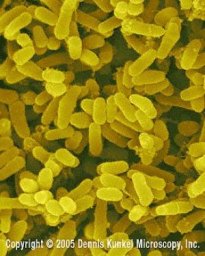
mycobacterium leprae
|
|
Field Projects Leprosy Control, Laos 2009
In the Lao People's Democratic Republic leprosy mainly occurs among minorities that are often hard to reach. Contamination is usually discovered only in a late stage, when mutilations are already severe and irreparable. One of the things the Leprosy Foundation devotes itself to in Laos is better registration and medical guidance of leprosy patients, examination of people whom leprosy patients have been in contact with, and trainings and courses for local health workers.
News update 2010:
In 2009 the Turing Foundation again contributed € 50,000
to the field programs of the Leprosy Foundation in Laos.
Because of local irregularities, the Leprosy Foundation has had to put the project on hold
and has returned the donation.
See also:

Leprosy Field Visit in Luang Namtha, Laos
|
|
Field Projects Leprosy Control, Laos 2008
In the Lao People's Democratic Republic leprosy mainly occurs among minorities that are often hard to reach. Contamination is usually discovered only in a late stage, when mutilations are already severe and irreparable. One of the things the Leprosy Foundation devotes itself to in Laos is better registration and medical guidance of leprosy patients, examination of people whom leprosy patients have been in contact with, and trainings and courses for local health workers.
In 2008 the Turing Foundation contributes € 50,000 to the activities of the Leprosy Foundation in Laos.
See also:
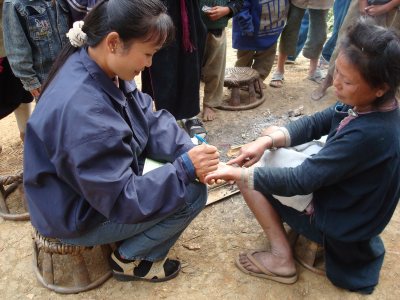
Leprosy control in Laos, 2008 (Photo Dr. Richard de Soldenhoff)
|
|
Projects to cure leprosy 2007
The Dutch Leprosy Foundation
invests all over the world in projects
that help diagnose and cure people who suffer from leprosy:
Angola, Bolivia, Brazil,
Cambodia, the Carribian, China,
Ethiopia, Gambia, India, Indonesia,
Laos, Madagascar, Myanmar, Nepal,
Nigeria, Surinam, Thailand, Vietnam and Zambia.
In 2007 the Turing Foundation contributes € 100.000,-
in supports of these projects.
See also:
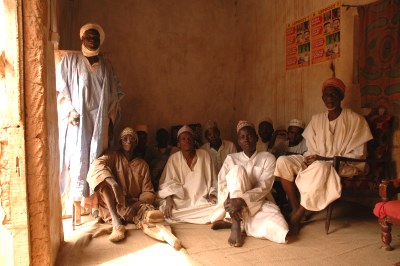
Leprosy Foundation, Nigeria, 2007
|
|
€1.000.000 for the Dutch Leprosy Foundation, 2006-2007
The Dutch Leprosy Foundation
has devoted itself for forty years to creating a world in which the permanent suffering, caused by leprosy, is no longer existent and is finally eradicated.
The Turing Foundation recognizes the dedication and the expertise of the Leprosy Foundation and saw such like-mindedness in their objectives that it decided to donate € 1.000.000,-.
See also:

Milou Halbesma presents €1,000,000 to Kommer Braber, manager of the Leprosy Foundation
|
Recent projects
| |
| |
|
|